
Leak Detection and Repair in Singapore
Water stains, damp patches, musty smells and pooling water that suggest a hidden leak.
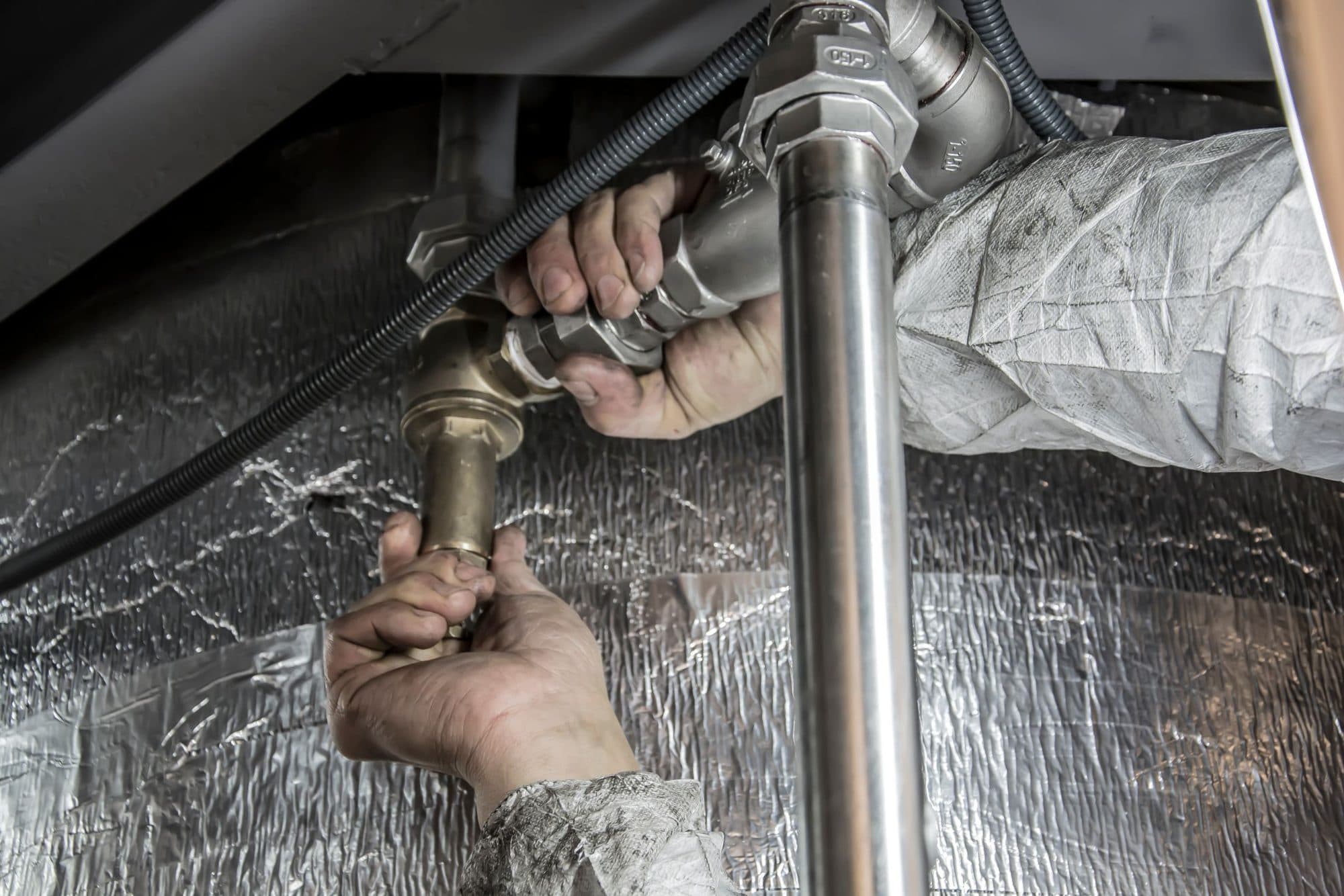
Common signs of a plumbing leak
A leak does not always announce itself. Often the first sign is a faint stain spreading across a ceiling, a patch of wall that feels cool and damp, a musty smell inside a cupboard, or a water bill that has moved without any change in how the property is used.
- Water staining or discolouration on a ceiling or wall
- A patch of wall, floor, or cabinetry that feels damp or cold
- A musty or damp smell that does not clear
- Paint or plaster that is bubbling, flaking, or lifting
- Water pooling where no drain or outlet is present
- A water bill that has risen without a change in usage
- The sound of running water when everything is switched off
- Unexplained dampness at the base of a wall or around a fixture
What the visit may involve
Tracing a leak is a process of narrowing down where water is coming from. That can mean checking accessible pipework, joints, fittings, and fixtures first, then working towards the parts of the system that are concealed.
- Questioning and inspecting to narrow down the likely source
- Checking accessible pipework, joints, valves and fittings
- Checking fixtures and appliances connected to the water supply
- Repairing or replacing the section of pipework or fitting responsible
- Re-testing the repair to confirm it holds
- Advising on any secondary damage that needs a different trade
What to know
- The method used depends entirely on what is accessible. Where a leak is concealed behind tiling, walls, or flooring, locating it may require opening up the finish, and that is discussed with you before it happens.
- We do not claim to detect every leak without any exploratory work.
- Repairing the plumbing does not repair the damage it caused. Stained ceilings, damaged cabinetry, and affected plaster are normally a separate scope of work.
- A leak that has been traced to a shared or common riser may sit with the building management rather than the unit owner.
What to tell us
Because water travels, the point where you notice damage is not always the point where the leak is. It is worth describing everything you have seen, including anything that seemed unrelated.
- Exactly where you have noticed dampness, staining, or water
- How long it has been visible, and whether it is spreading
- Whether it gets worse after using a particular tap, shower, or appliance
- Whether the affected area is on a top floor, a ceiling below a bathroom, or near a riser
- Whether the building has a management office that needs to be informed
- A number to call back on, in case the line drops.
Homes and business premises: HDB flats, Condominiums, Private landed homes, Offices and retail premises, Food and beverage outlets.
You hear the price before the work starts.
Tell us the problem and your location. The call-out charge, the work involved and the parts are confirmed before anything begins.
Ask about a visitA call, then a time.
Tell us what's wrong
Call or send the form, any hour.
We confirm the details
We explain the visit and the cost.
The visit is arranged
Then the time is agreed.
Leak Detection and Repair questions
How do you find a leak that is not visible?
By narrowing it down. Accessible pipework, joints, and fixtures are checked first, and the results are used to work towards less accessible areas. If concealed pipework has to be opened up, that is discussed before any cutting begins.
Can a leak be repaired the same day?
Sometimes, but it depends on what is found and on access. We confirm what the work involves and the charges that apply before work begins, rather than promising an outcome in advance.
Will you repair the water damage as well?
Plumbing repair and building repair are different scopes. We attend to the plumbing fault; stained ceilings, ruined cabinetry, and damaged plaster are normally handled separately.
The leak appears to be coming from a neighbour's unit. What then?
Leaks that cross unit boundaries usually involve building management. It is worth informing them early, and we can confirm what is visible from your side.